TERMITE INTRO
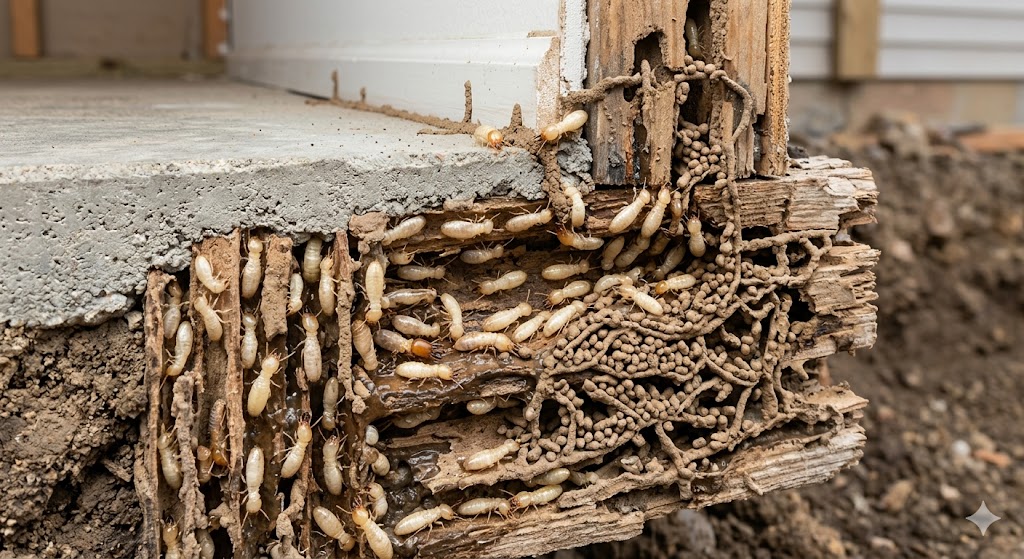
Termites are highly destructive social insects known as "silent destroyers" because they secretly consume wood, paper, and insulation. Living in vast underground or wood-based colonies, they break down cellulose, causing billions in structural damage annually. Early detection and professional treatment are essential to protect your home’s integrity from these persistent pests.
TERMITE CONTROL SOLUTION
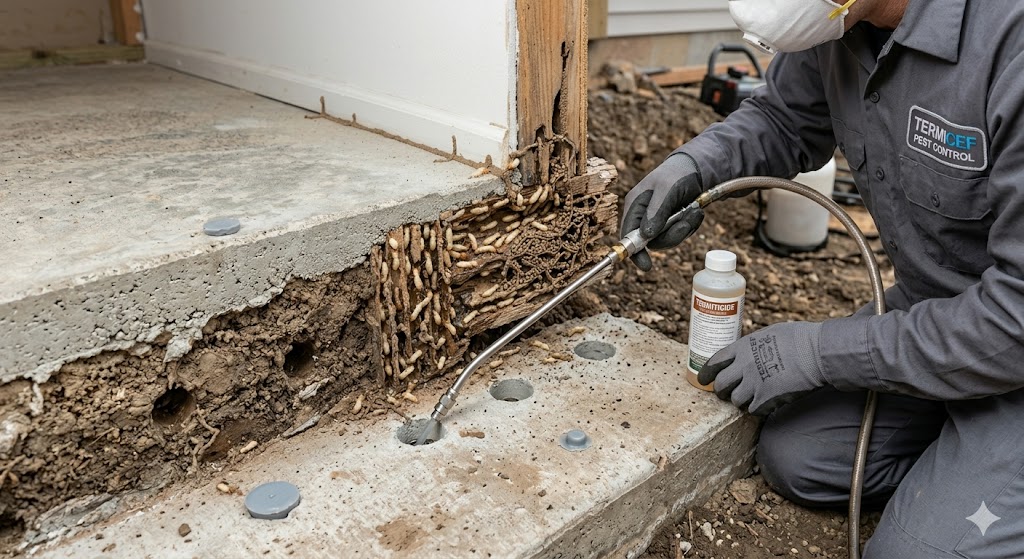
1. Drilling: Pest management professionals use high-powered drills to create small holes (roughly 12mm in diameter) at regular intervals—typically every 12 inches—along the external walls and internal floor joints.
2. Injection: A potent liquid termiticide is injected under high pressure into these holes. This ensures the chemical reaches deep into the soil or masonry where termites travel.
3. Sealing: Once the treatment is absorbed, the holes are sealed with white cement or wax to match the floor aesthetics.
RODENT CONTROL INTRO
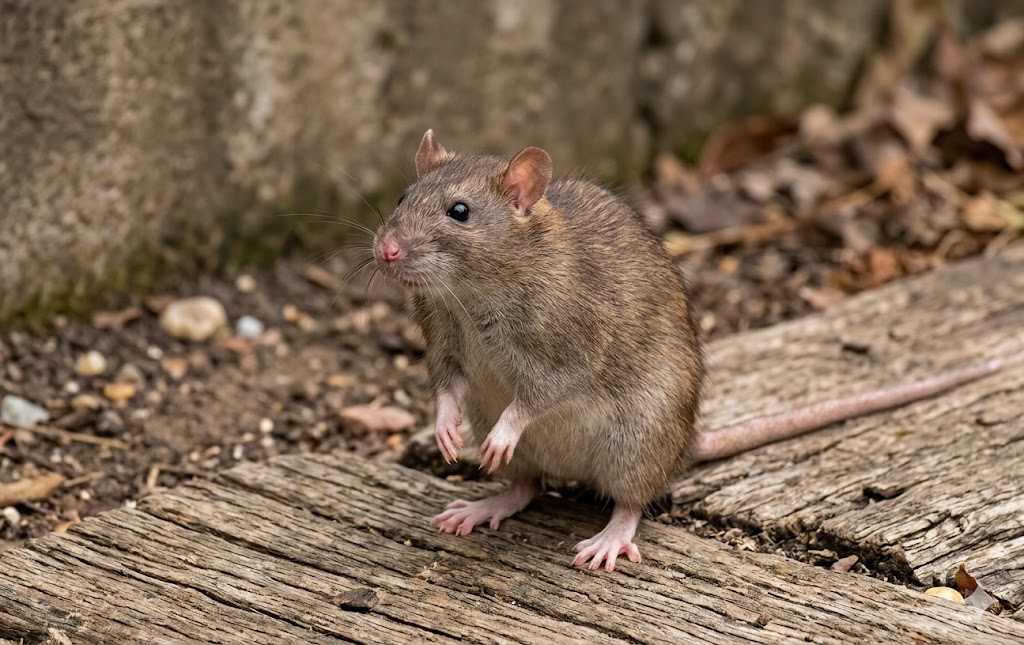
Rodents are a huge group of mammals, making up about 40% of all mammal species! They are found all over the world. Their key feature is a pair of long, sharp front teeth (incisors) in their top and bottom jaws. These teeth never stop growing, so rodents have to gnaw on things constantly to keep them from getting too big. This gnawing is where their name, from the Latin word meaning "to gnaw," comes from. Rodents are a very important part of the environment, but some types can be pests. There are many different types, including mice, rats, squirrels, and beavers.
TYPES OF RODENT
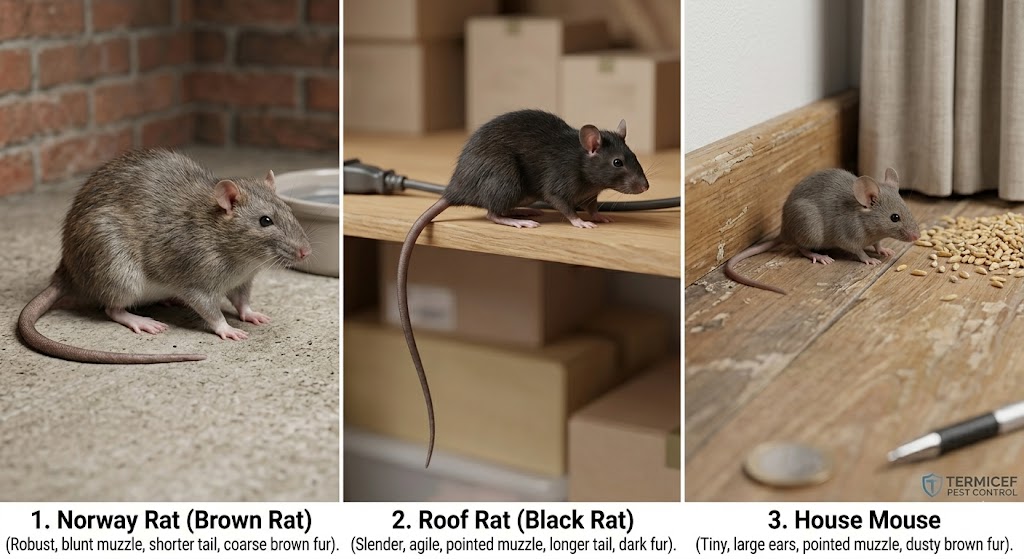
1. Norway Rat (Brown Rat) The Norway rat is a large, heavy-set rodent that prefers living at ground level or in burrows. They have blunt snouts, small ears, and thick tails. Known for being aggressive scavengers, they often nest in basements, sewers, or under building foundations and are excellent swimmers
2. Roof Rat (Black Rat) Roof rats are smaller and more agile than Norway rats. They are expert climbers with long tails used for balance. True to their name, they prefer high places like attics, rafters, and trees. They are sleek, dark-colored, and typically enter buildings through roof lines or utility wires
3. House Mouse The house mouse is much smaller than rats, with large ears and a long, thin tail. They are highly curious and can squeeze through tiny gaps the size of a pencil. While they stay close to food sources, they reproduce rapidly, making them a common household pest worldwide
RODENT CONTROL SOLUTION
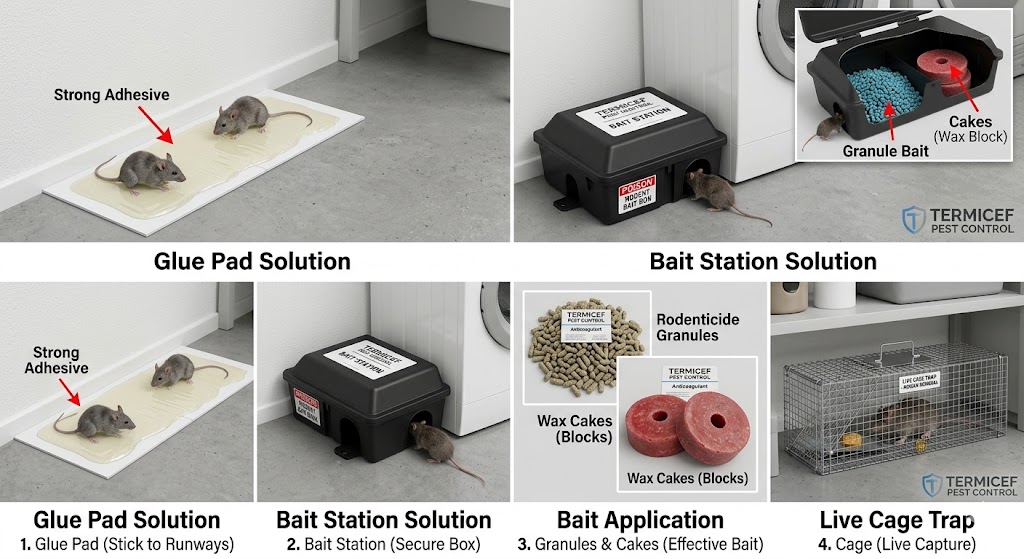
1. Glue Pads
These are flat boards coated with a strong, sticky adhesive. They are placed along walls or "runways" where rodents travel. When a mouse or rat steps on the pad, they become trapped.
• Best for: Small mice and identifying entry points.
2. Rodent Bait Stations (Boxes)
Tamper-resistant boxes are used to hold poisonous baits securely. They protect the bait from weather and prevent children or pets from reaching the chemicals. Rodents enter the box, eat the bait, and leave.
3. Granules and Cakes (Baits)
• Granules: Small pellets often used in burrows or hard-to-reach voids.
• Cakes (Blocks): Moisture-resistant wax blocks (Cakes) are ideal for damp areas like sewers or gardens. They contain anticoagulants that eliminate the rodent a few days after ingestion.
4. Cages (Live Traps)
Cages use a spring-loaded door mechanism triggered when the rodent steps on a plate to reach a food lure (like peanut butter).
• Best for: Humane removal or catching larger rats without using chemicals.
Why this Multi-Step Approach Works
Using Rodent Boxes with Cakes provides a long-term solution by reducing the population, while Glue Pads and Cages offer immediate results for stray rodents inside the building.
Pro Tip: Always place these solutions in dark, quiet corners, as rodents rarely cross open floor spaces